















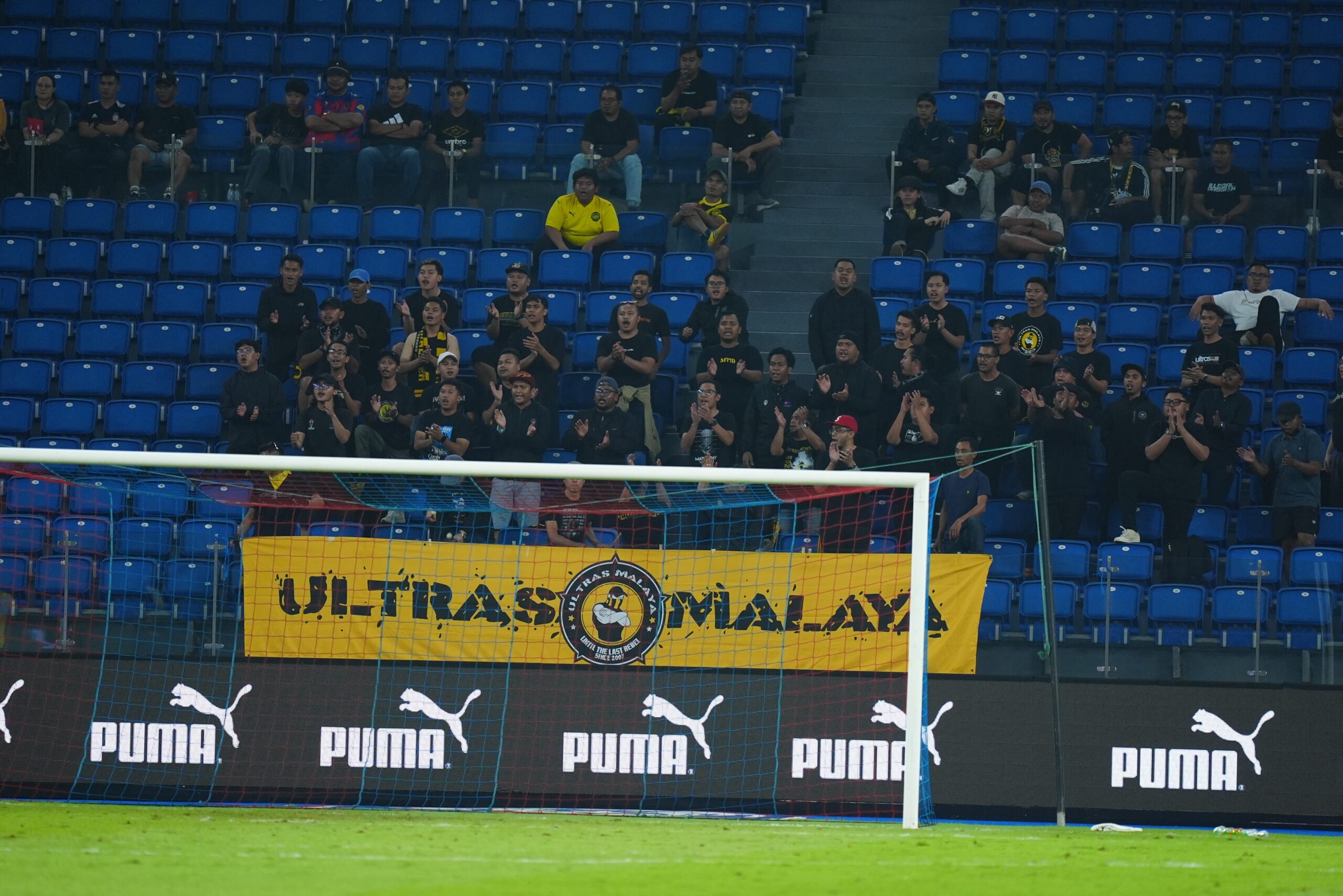
Malaysian supporter group Ultras Malaya has reignited debate surrounding governance and accountability in local football after publishing a strongly-worded article on its UM’07 page backing the #KembalikanBolaSepakKepadaRakyat (KBSKR) movement.
The article, titled “Today, Demanding Accountability Is Considered a Liability”, criticised what it described as a growing culture within Malaysian football where supporters demanding transparency are increasingly treated as troublemakers rather than stakeholders of the game.
According to the statement, the real issue in Malaysian football is no longer simply failed systems, questionable decisions, or unresolved controversies — but the perception that fans who ask difficult questions are somehow damaging the sport itself.
“Supporters ask questions and are labelled noisy. Supporters demand answers and are accused of attacking football. Supporters speak about reform and are accused of trying to destroy the game,” the article stated.
The article stressed repeatedly that KBSKR is not a political movement attempting to seize control of Malaysian football institutions.
Instead, the movement said its core objective is straightforward: accountability.
Among the group’s primary demands is a review of the citizenship status of seven players allegedly linked to document falsification controversies.
The statement argued that if citizenship approvals were obtained through compromised or manipulated processes, the issue can no longer be viewed as a minor technical matter.
“This is not about hating players. This is about process, national integrity, and the dignity of Malaysian football,” the article emphasised.
The movement questioned why such citizenship approvals should remain untouched if the integrity of the process itself has been compromised.
KBSKR also renewed calls for the national team structure, Harimau Malaya, to be fully returned under the authority of the Football Association of Malaysia (FAM).
The article clarified that the demand does not necessarily mean supporters believe FAM is free from criticism. Instead, the issue revolves around having a clearly accountable and transparent structure.
The movement argued that responsibility in Malaysian football has become increasingly blurred, with different parties allegedly shifting blame whenever controversies arise.
“When failure happens, people must know who is responsible. When scandals happen, people must know who answers,” the statement read.
According to the article, a structure where responsibility can continuously be deflected between organisations only weakens trust within the football ecosystem.
Beyond current controversies, Ultras Malaya’s article claimed Malaysian football has long suffered from deeper cultural and structural issues.
The statement accused certain individuals and institutions of using football as a platform for political influence, personal branding, and power struggles rather than genuine sporting development.
It highlighted recurring problems such as:
- Unpaid player salaries
- Financial instability among clubs
- Weak grassroots development
- Poor infrastructure
- Lack of long-term planning
- Supporters being valued only when financially beneficial
The article argued that document scandals and club crises are merely symptoms of a wider governance problem.
“As long as football is managed as a project of power instead of a public trust, these problems will continue to repeat themselves,” the movement declared.
The article concluded with a direct challenge toward critics of the KBSKR movement, questioning whether they are truly defending Malaysian football — or simply defending a culture where powerful institutions are never forced to answer difficult questions.
Ultras Malaya insisted that accountability should never be viewed as a threat to football, but rather as a necessary foundation for rebuilding trust and ensuring sustainable progress.
“Demanding accountability is not the liability. The real liability is a system that fears scrutiny,” the article stated.
Credit Photo : FAM