

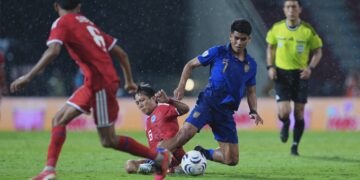











Belgium fought back to secure a 1-1 draw against Egypt in a fiercely contested Group G clash at the FIFA World Cup 2026, with an unfortunate own goal from Mohamed Hany denying the Pharaohs what would have been a historic first-ever World Cup victory.
Egypt appeared on course for a famous triumph after a disciplined and impressive display against one of Europe’s traditional powerhouses, but Belgium capitalised on a fortunate moment in the second half to salvage a valuable point.
The Pharaohs made their intentions clear from the outset, combining defensive organisation with dangerous counter-attacking football.
Their breakthrough arrived in the 20th minute when captain Mohamed Salah produced a perfectly weighted pass into the path of Emam Ashour, who calmly finished past the Belgian goalkeeper to send Egyptian supporters into celebration.
The goal capped an excellent opening period for Egypt, who restricted Belgium’s attacking threats while continuing to create opportunities of their own.
Led by Salah’s creativity and a disciplined defensive structure, the African side carried a deserved 1-0 advantage into the halftime interval.
Belgium found it difficult to penetrate Egypt’s compact defensive setup for much of the contest.
The Red Devils enjoyed spells of possession but lacked the cutting edge required to unlock a determined Egyptian backline that remained well organised throughout the first hour of the match.
Recognising the need for greater attacking firepower, Belgium head coach Rudi Garcia introduced experienced striker Romelu Lukaku in the 66th minute as part of an aggressive tactical reshuffle aimed at rescuing the result.
Just moments after the substitution, Belgium found their equaliser through a slice of fortune.
In the 66th minute, defender Mohamed Hany attempted to deal with a dangerous Belgian delivery inside the penalty area but inadvertently diverted the ball into his own net, leaving goalkeeper Mostafa Shobeir helpless.
The unfortunate own goal dramatically altered the momentum of the match and provided Belgium with a lifeline after struggling to create clear-cut opportunities.
Following the equaliser, Egypt head coach Hossam Hassan responded with a series of substitutions designed to maintain defensive balance and preserve at least a point.
The introductions of Ramy Rabia, Karim Hafez, Ahmed “Zizo” Sayed, Ibrahim Adel, and Hamza Abdel Karim helped Egypt remain competitive as Belgium pushed for a late winner.
Belgium continued to search for a breakthrough, with Garcia later introducing Hans Vanaken and Matias Fernandez-Pardo, but Egypt’s defence held firm under increasing pressure.
The match also saw yellow cards issued to Egypt’s Marwan Attia and Ahmed Fattouh, while Belgium’s Timothy Castagne and Maxim De Cuyper were also booked.
While Belgium avoided an opening-match defeat, the result will leave Egypt wondering what might have been after producing one of their most complete World Cup performances in recent memory.
The Pharaohs came within minutes of recording their first-ever victory at a FIFA World Cup, only to see their dream disrupted by an unfortunate own goal.
Nevertheless, Egypt’s display demonstrated that they are capable of competing with elite opposition and will take confidence into their remaining Group G fixtures.
For Belgium, the draw serves as a warning that tougher performances will be required if they are to challenge for a deep run in the tournament.
With both teams earning a point, the battle for qualification from Group G remains finely balanced heading into the second round of fixtures.
Egypt will be encouraged by their performance despite the disappointment, while Belgium know significant improvements are needed if they hope to fulfil expectations at FIFA World Cup 2026.
Credit Photo : EFA